Best Practice
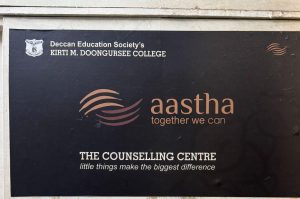
- Aastha Counselling Cell: Together We Can
The Aastha Counselling Cell: Together We Can is a structured institutional initiative committed to promoting the mental, emotional, and psychological well-being of students and staff. Aligned with the vision of holistic education and the guidelines of NAAC for student support and progression, the cell serves as a dedicated platform to address emerging mental health concerns within the campus community.
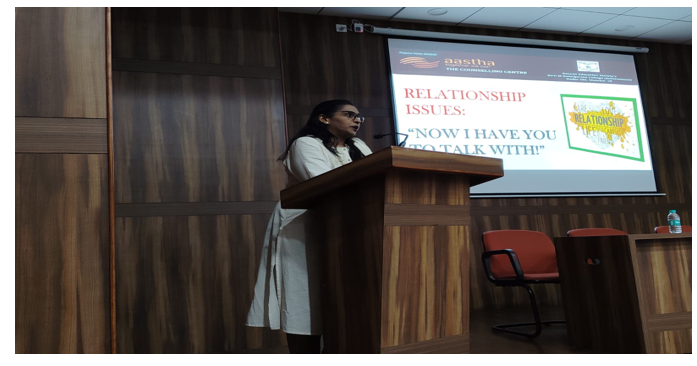
In the contemporary higher education context, students encounter multifaceted challenges such as academic stress, career uncertainty, peer pressure, and personal conflicts. Recognizing these concerns, the Aastha Counselling Cell provides a safe, confidential, and inclusive environment for individuals to seek professional guidance. The cell conducts individual counselling sessions, group therapy, awareness workshops, and sensitization programs for teaching and non-teaching staff, thereby fostering a culture of empathy and emotional resilience.
The practice emphasizes preventive as well as curative aspects of mental health care. Regular initiatives such as Mental Health Awareness Month, career guidance sessions, and volunteer engagement programs contribute to early identification and intervention. Faculty sensitization plays a crucial role in enabling teachers to identify early signs of distress among students and extend appropriate support.
Evidence of success is reflected in increased participation, positive feedback from stakeholders, and measurable improvement in students’ coping mechanisms and overall well-being. The centre has also facilitated timely referrals for specialized psychiatric care in critical cases, ensuring a continuum of support.
Despite its achievements, challenges such as social stigma, limited awareness, and infrastructural constraints persist. However, with continuous efforts towards awareness generation, capacity building, and institutional support, the Aastha Counselling Cell aspires to evolve into a comprehensive mental health support system, contributing significantly to the creation of a nurturing and emotionally empowered academic environment.

- Title of the Practice: Say No to Sexual Harassment
The practice “Say No to Sexual Harassment” is a sustained extension activity implemented through the National Service Scheme (NSS) with the objective of promoting gender sensitization, social responsibility, and community awareness. Conducted consistently over the past three years, this initiative aligns with NAAC’s emphasis on institutional social responsibility, value-based education, and community engagement.
In the present socio-cultural context, the rising instances of sexual harassment pose a serious threat to women’s safety and societal harmony. Recognizing the urgency of addressing this issue at the grassroots level, the institution adopted an innovative and impactful approach through street theatre. Festivals such as Ganesh Chaturthi, which witness massive public participation, were strategically utilized as platforms for awareness dissemination.
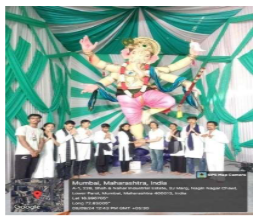
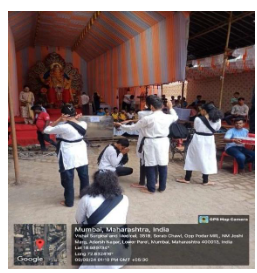
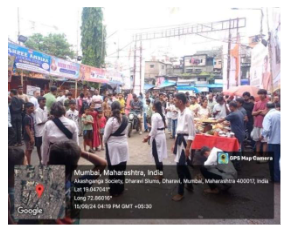
Under this practice, NSS volunteers organized the activity “151 Street Play on the Occasion of Ganesh Chaturthi” across multiple days in September 2024. Volunteers formed small groups and performed 151 street plays at various public Ganpati mandals across Mumbai and nearby areas. These performances creatively depicted real-life situations, consequences of harassment, and the importance of respect, consent, and legal awareness. The initiative, popularly known as “Kirti Jagar,” effectively blended creativity with civic responsibility, ensuring maximum outreach in a festive environment.
The evidence of success is reflected in the active engagement of the community, positive public response, and enhanced awareness among spectators. Volunteers themselves emerged as confident communicators and advocates for social change, demonstrating increased sensitivity towards gender issues. The program also strengthened teamwork, leadership, and communication skills among participants.
However, certain challenges were encountered, including difficulty in coordinating performances during festival days and balancing volunteers’ personal commitments. Despite these constraints, the initiative has been successfully sustained due to strong institutional support and student dedication.
Overall, this best practice stands as a model of experiential learning and community-oriented education, contributing significantly to the promotion of a safe, respectful, and inclusive society.
7.2. Best practices
1) Title of the Practice Aastha: Together We Can.
Objective: Aastha: Together We Can is a counselling cell launched to help students address their psychological issues, thereby promoting mental well-being. It follows the institute’s mission of promoting the overall development of the students and staff.
The Context :Higher education students experience stress related to studies, career pressures, and peer expectations.
The Practice:Aastha counseling cell provides private support, offering individual and group therapy to help students with mental health challenges.
Evidence of Success: Feedback from students and parents confirms the cell’s success. Many are recovering, and others are showing progress in mental well-being.
Problems Encountered and Resources Required :Seeking professional help for mental health concerns is still not widely accepted in society.
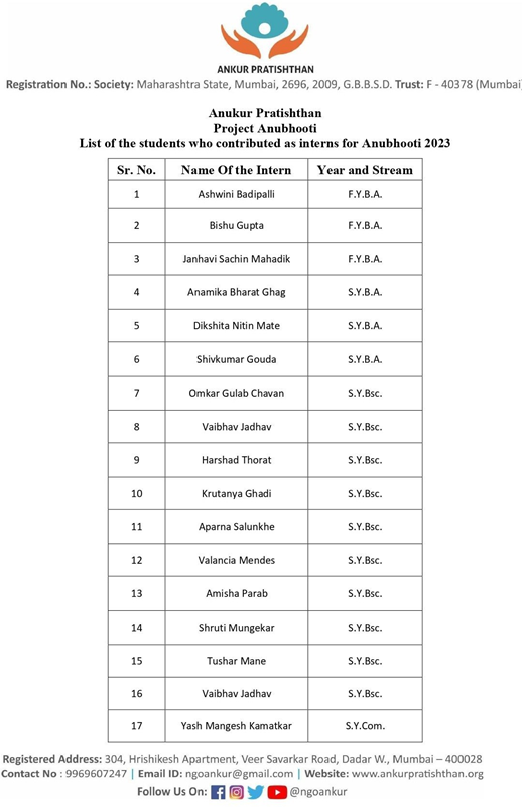
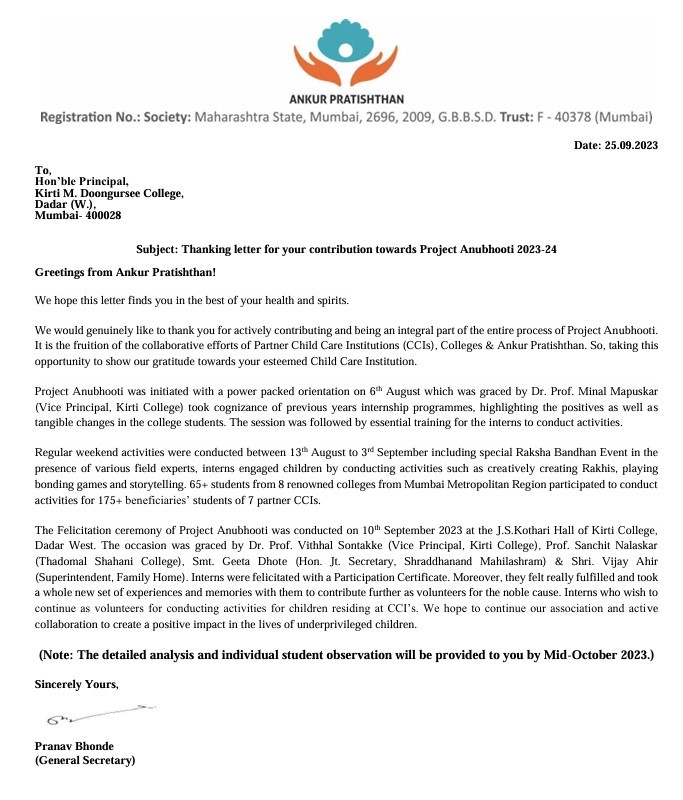
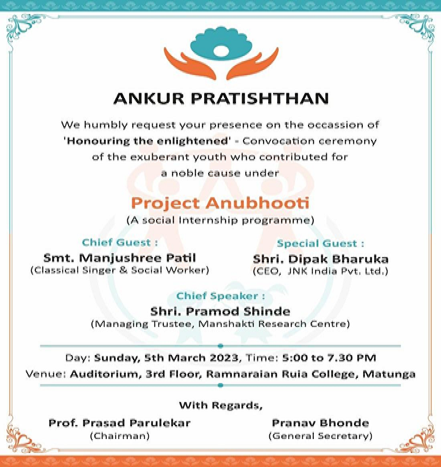
2)Title of Practice :Anubhooti: A Social Bond
Objective:To sensitise the students to the issues of orphan children inculcating a sense of social responsibility.
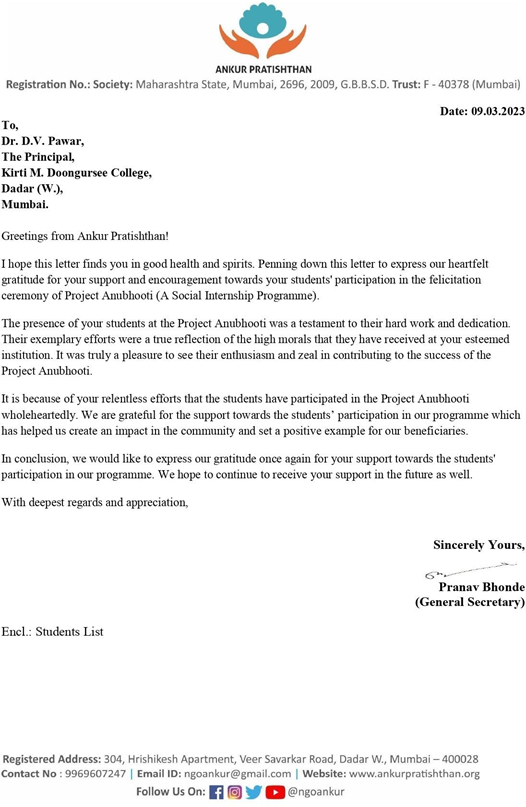
The Context :Ankur Pratishthan works for the overall development of children in orphanages in Mumbai and around
The Practice :Students worked for the underprivileged commencing in January on six consecutive Sundays.
Evidence of Success :Student interns had a life-changing and memorable experience. It gave them a sense of meaningful service.
Problems Encountered and Resources Required :Negotiating academics and social services has been a challenge for students.
7.2.1 Best Practice No: 1 (2022-23)
Title of the Practice Aastha: Together We Can
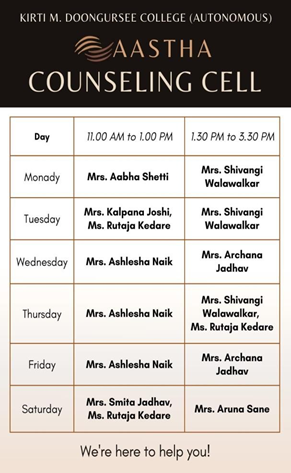
1. Objectives of the Practice Aastha: Together We Can is a counseling cell launched to help students to address their psychological issues thereby promoting mental well-being. It follows the mission of the institute for the all-around development of the students and staff. 2. The Context The prolonged, complex, and uncertain aftermath of the COVID‐19 crisis has posed problems and challenges for a balanced state of mind. Students in higher education face stress due to study, career, peer pressure etc. In the stage of adolescence, there are cases of psychological disorders cropping out of breakups, relationships as well and lack of communication in the family. There is a dire need for counseling and psychotherapy to navigate psychological differences to promote growth in education/career leading to personality development. 3. The Practice Aastha, a special cell with an isolated cabin to maintain anonymity and privacy is made available with the availability of the counselors throughout the week. Mental well-being is promoted with individual help and outreach events. Teachers refer the students in need to the counselors. A questionnaire with basic questions and an observation form is created. Group therapy as well as one-to- one sessions are conducted as per the requirement. 4. Evidence of Success Students’ and parents’ feedback speaks a lot about the success and further need of this cell. Respect for the anonymity of the individual is the key to the success of this activity. Review shows that many have recovered and still many on the path of recovery show their prescription and behavior. 5. Problems Encountered and Resources Required Seeking consultation for mental health issues is still not a practice in society due to poor awareness, lack of help-seeking behavior (stemming from stigma), and a desire and/or expectations to be self-reliant. Also, they often have invisible symptoms that are difficult to detect.
Title of the Practice Aastha: Together We Can.
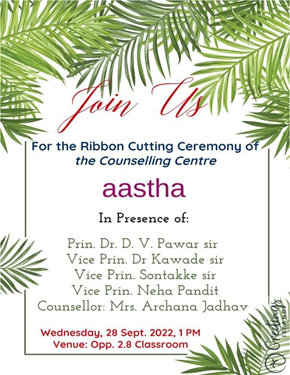
- Invitation Letter fot the Ribbon Cutting Ceremony of the Counselling Centre
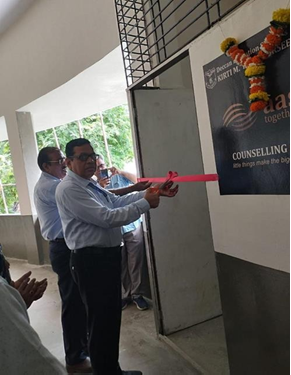
- The Ribbon Cutting Ceremony of the Counselling Centre
- Counselors Schedule
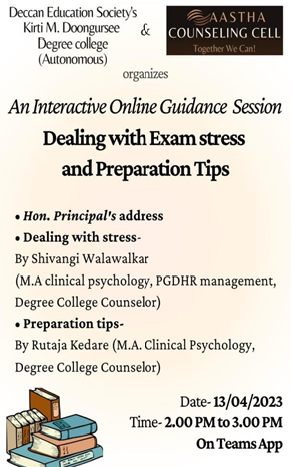
- Brochure of Guidance Session : Dealing with Exam Stress and Preparation Tips
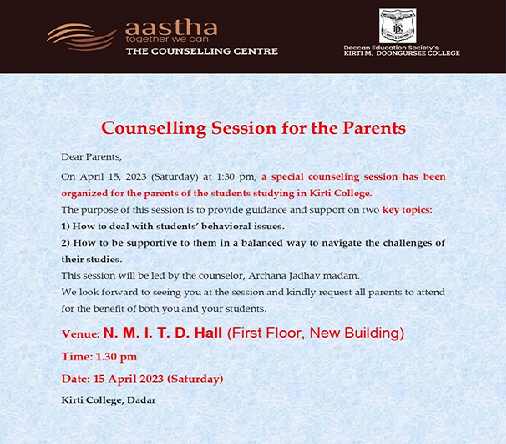
Notice: Parents counselling session
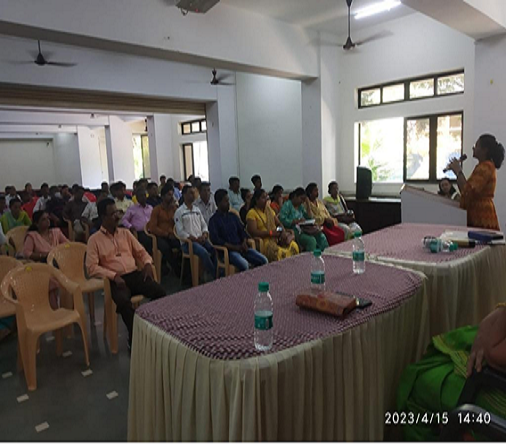
Parents counselling session
7.2.1 Best Practice No: 2 (2022-23)
Title of the Practice Anubhooti: A Social Bond
1. Objectives of the Practice Anubhooti is a social internship project run by the institution to sensitize the students to the issues of orphan children. Students are trained to be volunteers voluntarily for children in orphanages thereby inculcating in them a sense of social responsibility. 2. The Context Ankur Pratishthan is a CSO working for the overall development of children in orphanages in Mumbai and around. One of the founder members, Mr. Pranav Bonde is an alumnus of the Department of Political Science. Commenced in 2019, halted due to Covid-19, restarted and students worked for the – period 5th January 2023 to 5th March 2023. 3. The Practice The internship program started with an orientation session conducted by volunteers from Ankur Pratishthan to make the students aware of the details of the internship. The students for the internship were shortlisted after this by conducting a short interview. After training, students were divided into groups and allocated to orphanages near their residences. The students went to the respective orphanage on five consecutive Sundays for 3 hours. They planned, designed, and conducted various activities for the overall development of the children in the orphanages. 4. Evidence of Success On the day of completion, student interns expressed that it was a life-changing and memorable experience. During the activity, students enhanced their skills. They learnt to work in groups and realized the value of family. Many shared that they overcame their weaknesses and fears and decided to continue the work. 5. Problems Encountered and Resources Required Initially students were hesitant but gradually they realized the importance and enjoyed the activity with the children
Title of the Practice: “Anubhooti: A Social Bond”
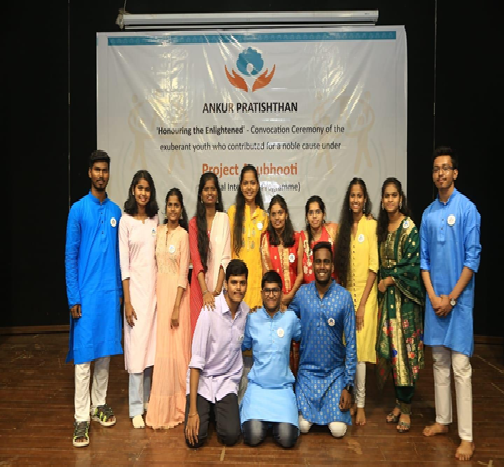
Kirti Students attending the -Convocation ceremony